Introduction
The Underground Space Engineering Laboratory belongs to the Department of Civil and Environmental Engineering and Architecture, Faculty of Engineering, Kumamoto University. Our research focuses on various issues in rock mechanics related to civil engineering and resource development fields.
Research Overview
Our laboratory addresses the resolution of diverse problems in civil engineering and resource development, with a particular emphasis on rock mechanics.
Studies on increasing near-fault fracture stiffness to control induced seismicity
Our study aims to develop a novel method to control the intensity of induced seismicity by increasing the stiffness of the fault damage zone surrounding the fault core. First, the validity of the proposed method is assessed through an analytical study by evaluating energy released from a seismic event whilst assuming linear slip-weakening behaviour.
Then, a mine-wide numerical model is constructed that can reproduce a complex and heterogeneous stress state within the fault damage zone by computing and applying equivalent compliance tensors to each element in the model, based on a discrete fracture network composed of millions of fractures.
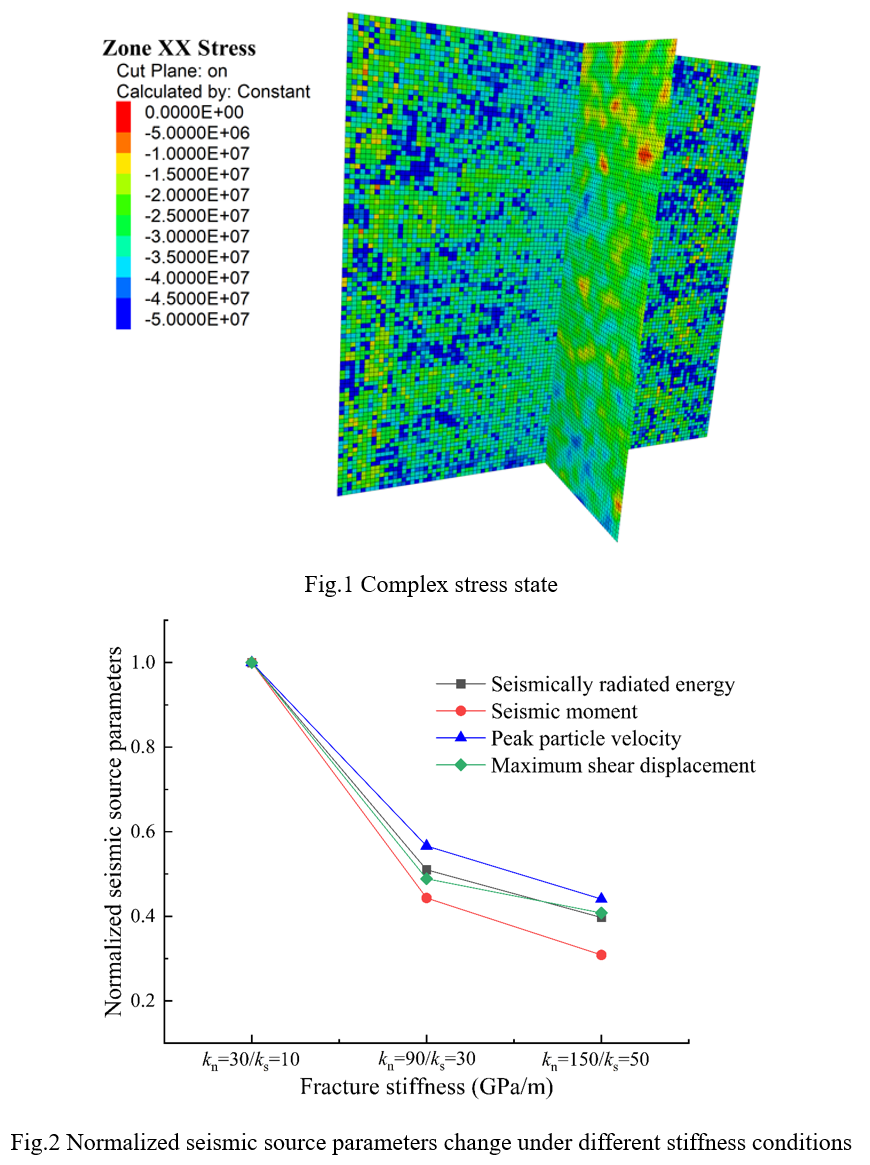
We found that fracture stiffness significantly affects all the seismic source parameters in most cases. When the fracture stiffness is increased by a factor of five, the seismic source parameters are decreased to approximately 40%-50%. This result was found to closely align with that derived from the analytical study. These results suggest that increasing fracture stiffness within
a severely fractured rock mass near the fault core can effectively mitigate seismic hazards and may provide a foundation for future implementation of this approach. In future work, we plan to further validate this approach using a discrete element model (DEM) to gain deeper insights into the underlying mechanisms and assess its feasibility under more complex geological conditions.
Integrating SAR coherence analysis with atmospheric dispersion modeling to assess mercury mobilization and fate from ASGM in hyper-arid environments
Mercury is a global pollutant, and among the largest anthropogenic sources of mercury emissions is artisanal and small-scale gold mining (ASGM), which releases 2000 tons annually into the environment.
In Chami, Mauritania, a town known for its hyper-arid climate, stands as a hub for artisanal miners bringing their gold ore for further treatment using whole amalgamation techniques to extract gold in the Grillage zone, a zone dedicated to ASGM activities. Mercury is released in large quantities; however, its fate and transport pathways remain poorly understood.
As a remote area in a developing country, and due to factors such as extreme aridity, minimal vegetation cover, and limited ground-based observation networks, assessing mercury mobilization is complicated.
This research aims to develop an integrated methodological approach that combines Synthetic Aperture Radar (SAR) coherence analysis, atmospheric dispersion modeling, and geochemical analysis of mercury in soil to track mercury emissions and deposition patterns from ASGM (source).
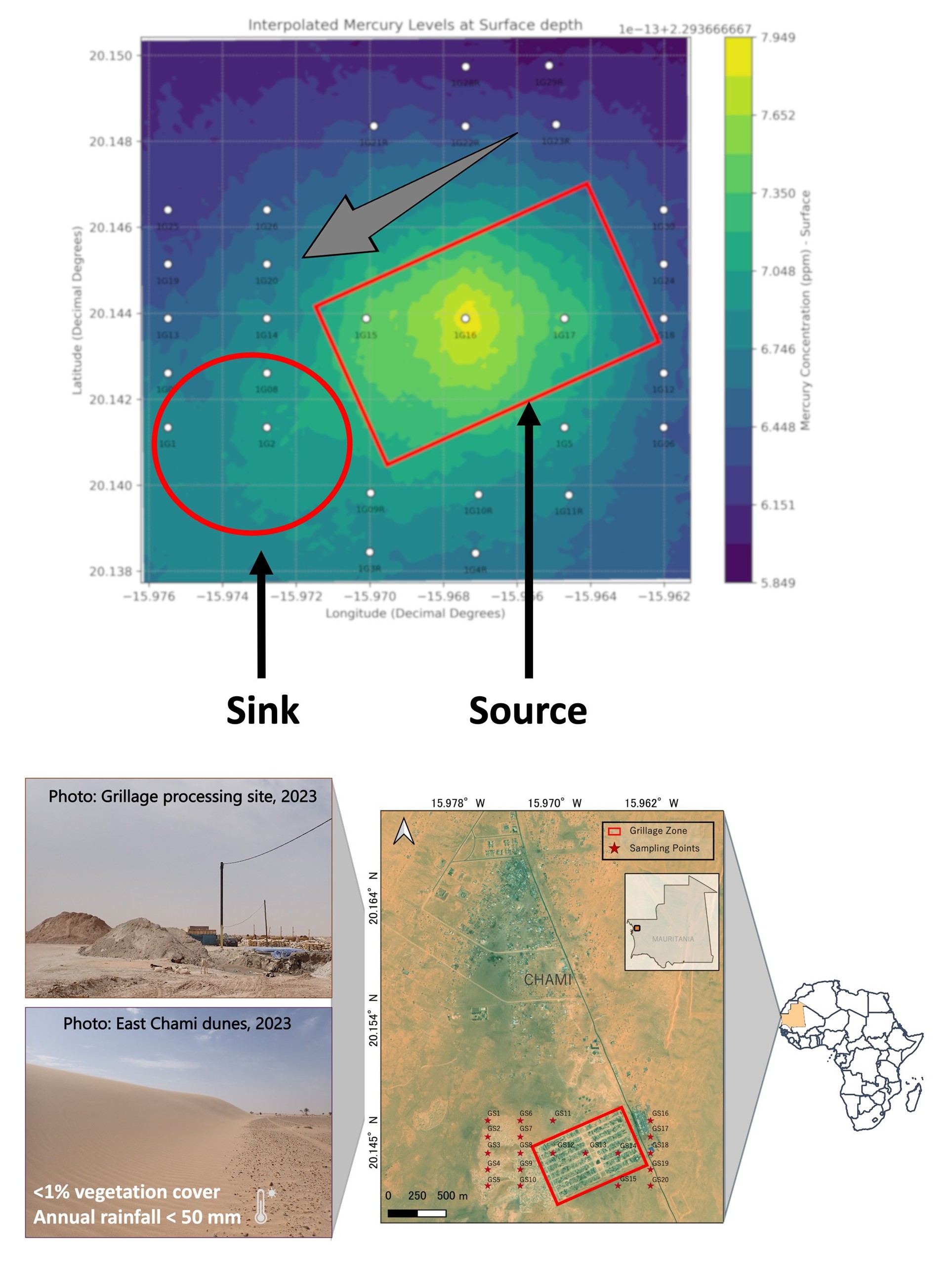
Surface disturbances associated with ASGM activity and intense mercury emissions can be detected using SAR coherence analysis. Simultaneously, simulating the transport and fate of mercury species through atmospheric dispersion modeling under the characteristics of meteorological conditions of the hyper-arid environments.
By integrating geochronological analysis, remote sensing, and atmospheric modeling, this study provides new insights into mercury distribution in extreme environments. It offers a low-cost, efficient methodology for long-term environmental monitoring.
Development of Enhanced Carbon Dioxide Mineralization Technologies
The global rise in CO2 emissions driven by increasing energy demands has intensified the urgency to limit global warming to below 2°C, as set by the Paris Agreement. This underscores the critical need for effective CO2 reduction strategies, including large-scale underground sequestration. However, conventional geosequestration techniques face challenges such as induced seismicity and potential surface leakage, highlighting the necessity for safer and more efficient carbon capture and storage (CCS) approaches.
My research focuses on the carbonation potential of different rock types, including serpentinite, peridotite, and basalt. Among them, serpentinite exhibited the highest reactivity, rapidly releasing Mg2+ within one week of CO2 exposure. Additionally, the influence of microbial solution containing carbonic anhydrase (CA) on carbonate formation was investigated under sealed conditions.
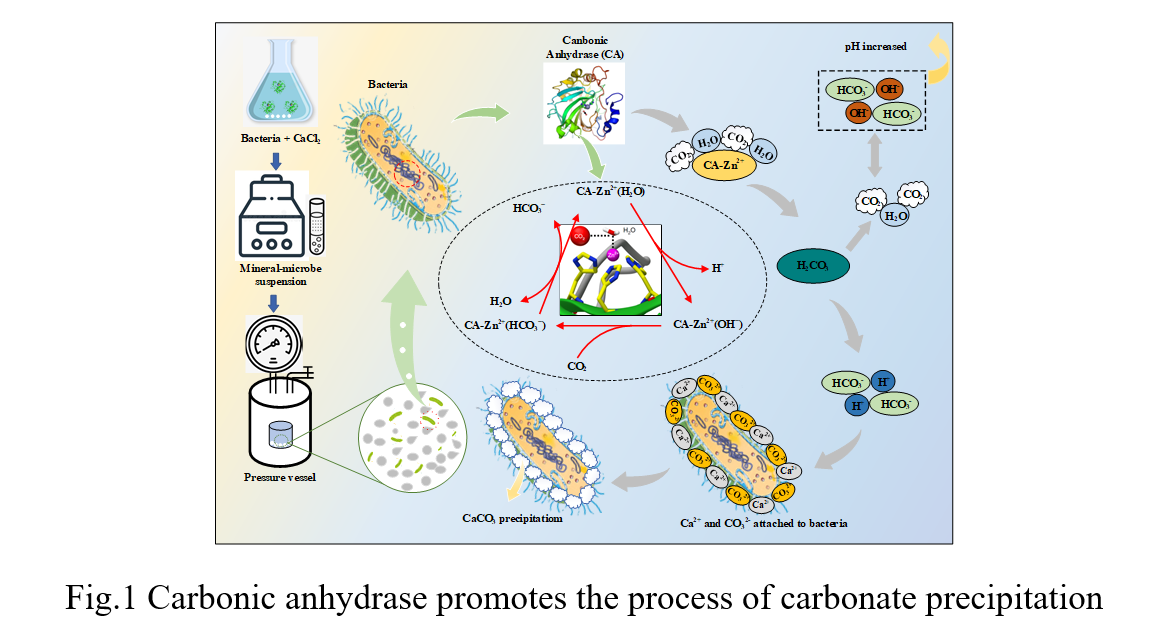
A combination of analytical techniques, including X-ray fluorescence (XRF), X-ray diffraction (XRD), thermogravimetric analysis (TGA), and attenuated total reflectance-Fourier transform infrared spectroscopy (ATR-FTIR) was employed to assess the extent and nature of carbonate precipitation. The results highlight serpentinite as the most promising rock for rapid CO2 mineralization due to its favourable dissolution kinetics and mineral composition.
Study on Stress Distribution within Fault Damage Zones
Our research aims to elucidate the stress distribution within fault damage zones, a fundamental issue in understanding rock mechanics and earthquake processes. All of our experiments—past, ongoing, and future—are designed to contribute to this ultimate goal. Unlike studies focusing on the effects of fracture size or propagation behavior, our primary interest lies in how complex fracture networks influence the internal stress state of rock masses.
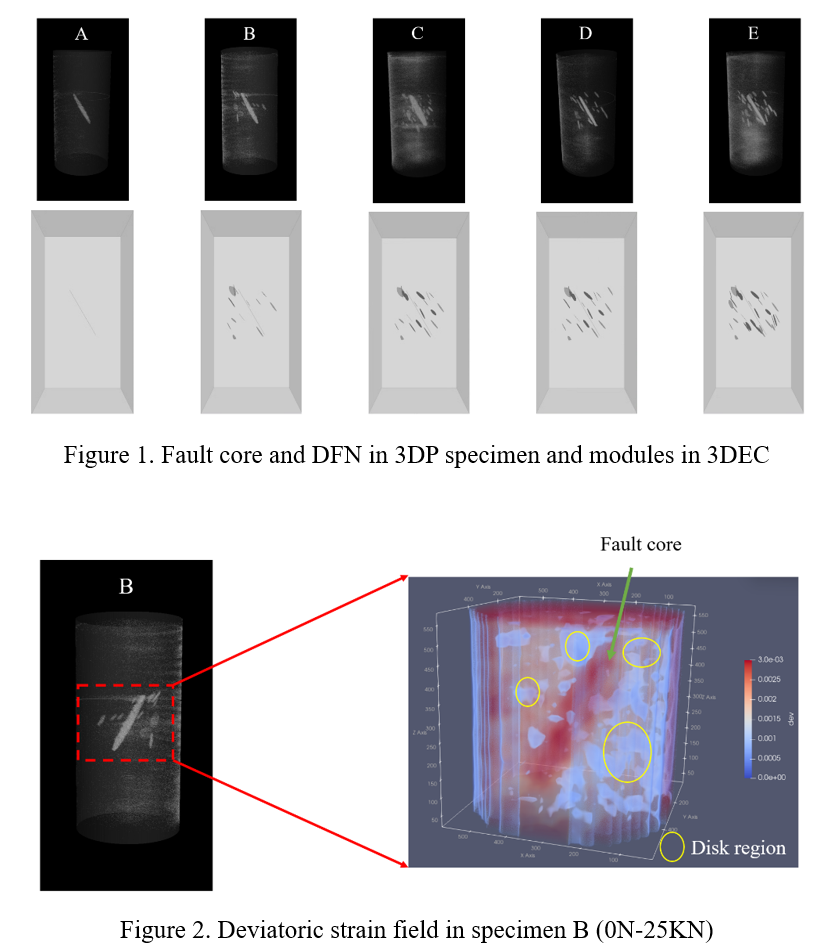
By combining 3D-printed rock analogs and numerical simulations, we seek to validate and refine computational models of fault zone mechanics. Our current work bridges the gap between purely numerical studies and experimental observations. In future stages, we plan to conduct fluid injection and direct shear experiments on rock-like materials with intricate fracture systems to further explore the coupling between stress, deformation, and fluid flow in fractured media.
Dynamic Behavior Analysis of the Tawarayama Tunnel Based on Dynamic Simulation of the Kumamoto Earthquake
The objective of this study is to clarify the stability and structural response characteristics of the Take Tunnel. In this research, velocity histories obtained from a source fault model (1) are used as input seismic waves for the Tawarayama model.
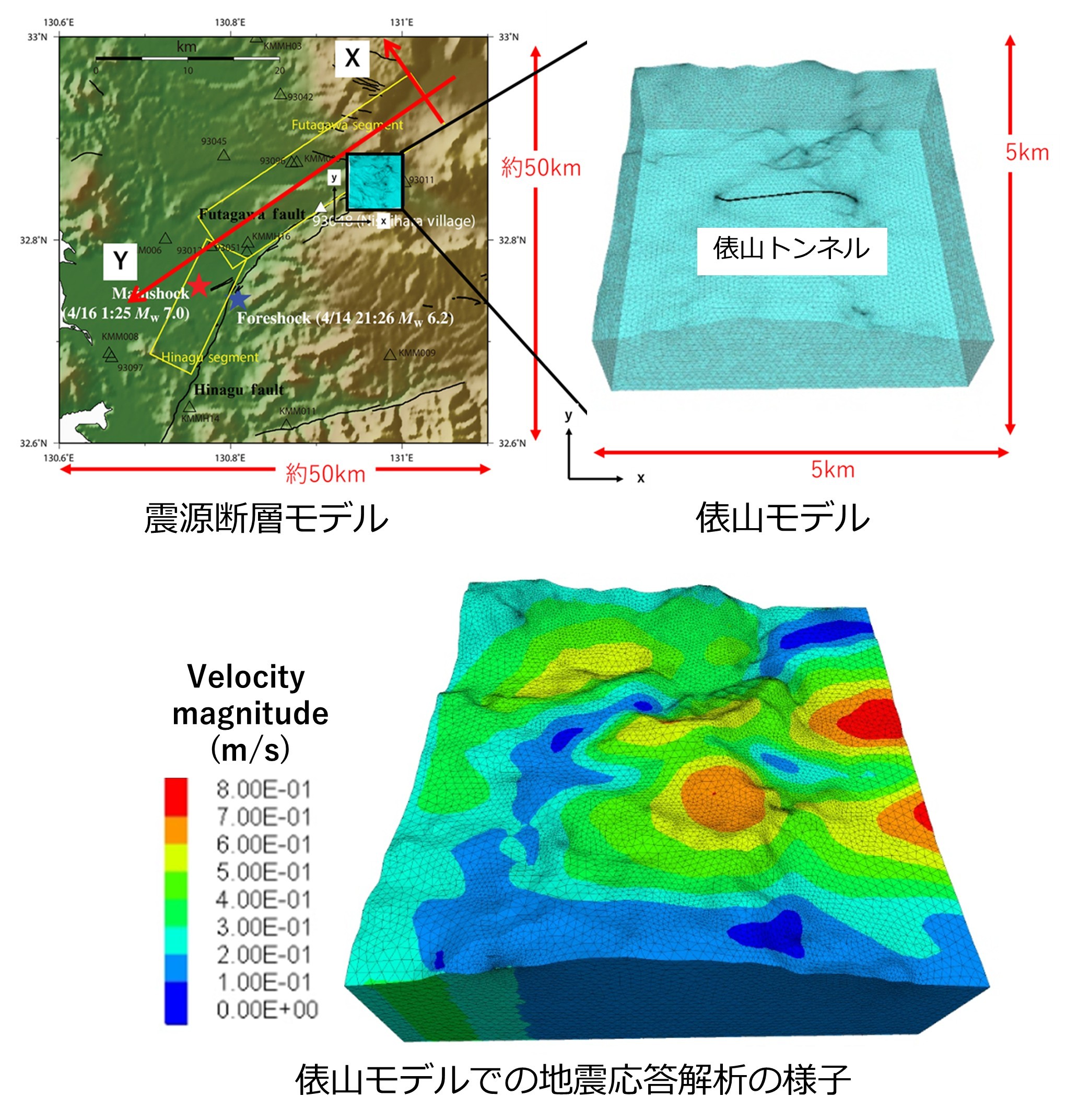
In the dynamic analysis, the methods of constructing the ground model, setting boundary conditions, and applying input seismic waves are examined.
Study on Displacement-Controlled Rock Bolts
When substantial deformation transpires during tunnel excavation, traditional rock bolts may fail as a result of rupture. To mitigate this issue, a novel displacement-controlled rock bolt (DC bolt), which integrates high support capacity with yielding performance, has been developed. This study utilizes the Okubo–Fukui model as a mechanical representation of time-dependent behavior, thereby enabling a more precise evaluation of the applicability of DC bolts during tunnel excavation in swelling ground.
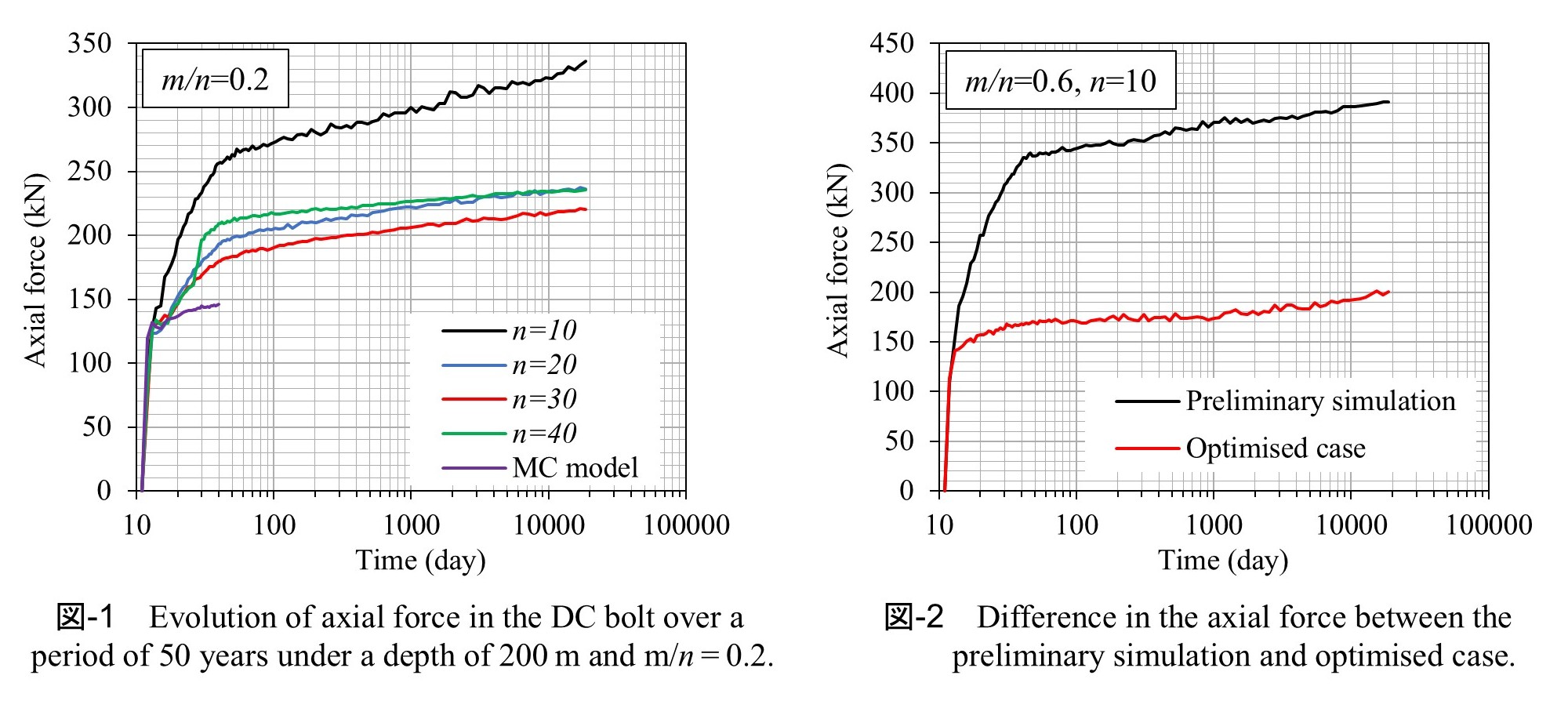
A parametric analysis was performed on serpentinite, taking into account variations in time dependence and brittleness. The results indicated that under conditions with significant time dependence, axial forces surpassed the tensile strength. Additionally, by enhancing the deformation capacity of DC bolts in accordance with the deformation behavior of the rock mass, axial forces could be maintained below the material's strength. These findings provide valuable insights for the development of design guidelines for DC bolts in highly time-dependent geological environments.
Analytical Study on Structural Response and Damage Mechanisms of Fault-Crossing Tunnels during Earthquakes
In the 2016 Kumamoto Earthquake, collapse of lining concrete and damage to support structures were observed in the Tawarayama Tunnel, which crosses an inactive fault. This study focuses on this damage case and uses numerical methods to investigate the structural response and damage mechanisms of fault-crossing tunnels during seismic events. A three-dimensional multi-scale numerical analysis is performed to simultaneously simulate seismic wave propagation and fault slip, enabling analysis of stress redistribution and lining damage at the fault intersection. The large-scale model reproduces seismic wave input and ground response, with its results used as velocity histories for the small-scale model. This approach allows for high-precision simulation of fault slip behavior and the dynamic response of support structures during earthquakes.
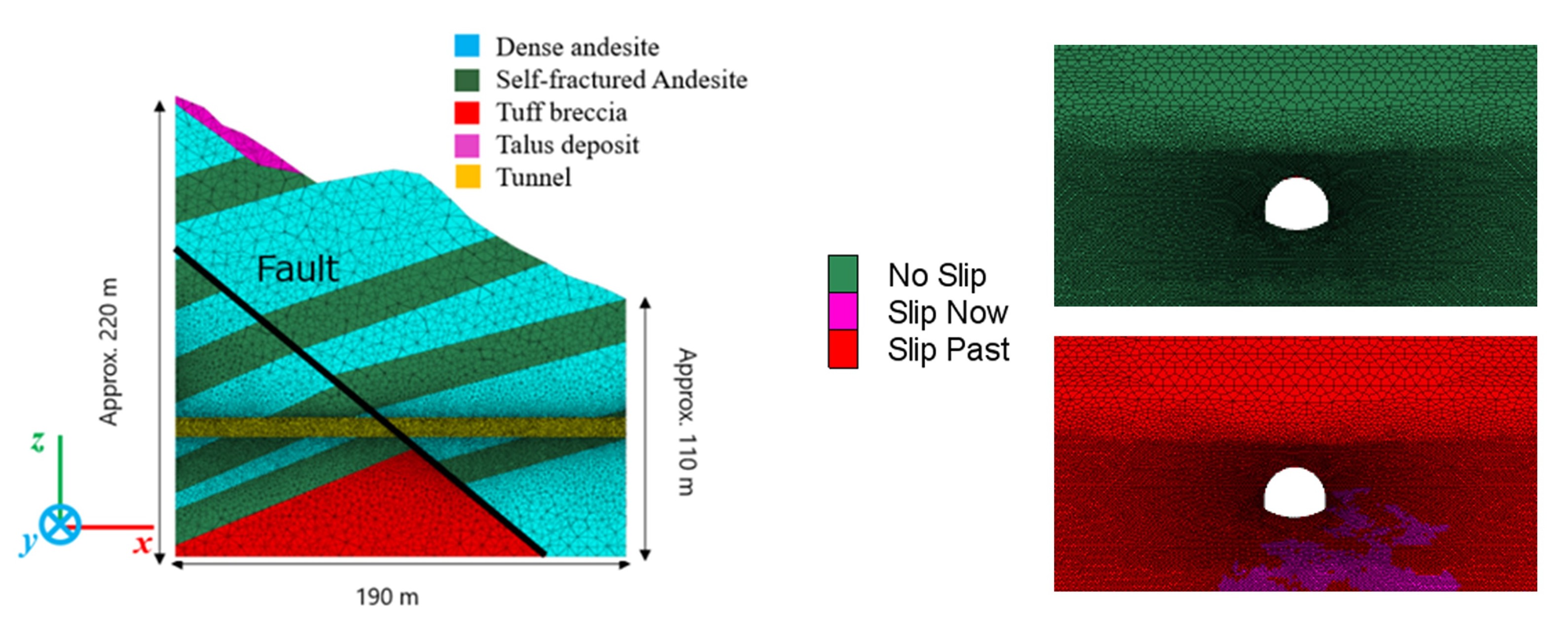
Current investigations focus on the propensity for stress concentration in tunnel linings caused by fault slip induced by seismic activity, as well as the correlation between observed damage locations and failure modes in situ. This research elucidates the interaction between seismic wave propagation and fault slip, and its influence on underground structural damage, with the objective of providing essential insights that inform the seismic design of fault-crossing tunnels.
Reference
1) Kenichi Tsuda : Dynamic Rupture Study of Near-Field Velocity Pulses during the 2016 Kumamoto Earthquake, Japan, Bulletin of the Seismological Society of America, Vol.111, 2021